Warning: [Beware of a few major spoilers for the 2017 live action film adaptation of Ghost In The Shell]
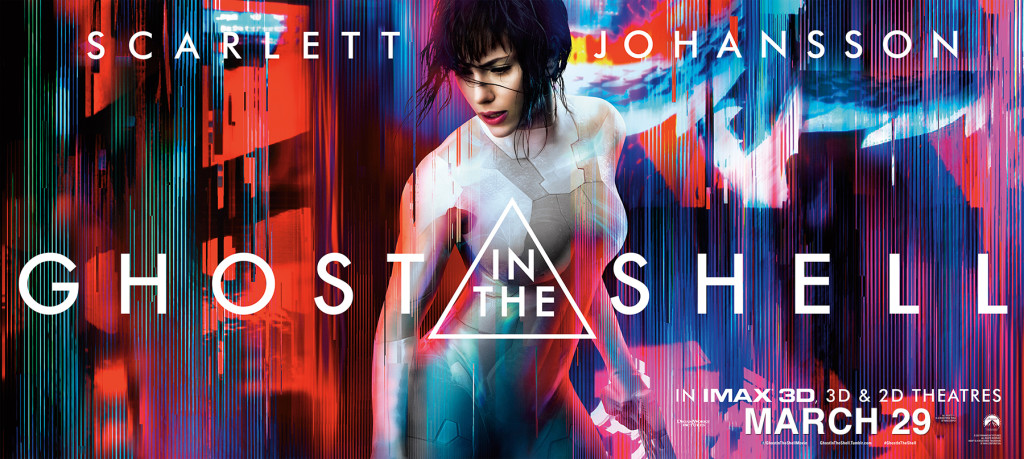 After having decided to watch Ghost in The Shell (2017), I can honestly say that I had mixed feelings. The more time I spent with Scarlett Johansson, the more uncomfortable I became with her as a protagonist. It wasn't abundantly clear why. She was alright, she could be a little stiff at times, and some lines were delivered a little awkwardly but overall her performance was inoffensive. I could even tune out and enjoy her stoic portrayal of The Major.
When the twist at the end arrived, it hit me hard. It was problematic. Here's why;
1. There was an Asian-American actress cast as The Major, buuuuuuuuuuuuuuuuuuuuutttt...
So [Spoiler Warning] in the end it turns out Motoko is a runaway girl captured by Hanka Robotics and turned into a cyborg after rebelling against society... Or something. I'm unsure if my memory is foggy or if it just wasn't clearly explained but hey, her name is Motoko, and she is Asian.
Too bad she gets twelve seconds on screen.
I admit, I got angry. I was like, wow, that was just condescending. The studio went through the trouble of casting an Asian-American actress but couldn't be bothered to actually give her the lead role. I could practically hear the snide remark of some studio exec saying "See, we did cast an Asian-American as Motoko! We've got no racial prejudices!"
I had to look up Kaori Yamamoto, who plays the younger Motoko.
2. There's literally no reason for Motoko to be white.
There could have been. There could have been. I'm serious, there was a way to make this film show an active awareness for white normativity and add a layer of depth to the film that would have made this a breakthrough title that played entirely to the strengths of a caucasian lead.
All they had to do was say why Motoko's cyborg body was white.
And not subtextually, not in a throwaway line (if there even was a throwaway line, I definitely missed it) all they had to do was explain that Motoko was white because she was made to resemble a standard of beauty at the time, and that even in a dystopic future, society still views caucasian features as superior to that of people of colour.
Have her look at some mannequins in a store, or an ad on television, or something. Show Motoko that her face is an ever-present, an unobtainable ideal. Something. Anything. Instead, Motoko's cyborg body is white because Motoko's cyborg body is white. It could have been asian, or black, or indian and with the sound reasoning of there being no reasoning, no difference would have been made.
I get that studios are afraid of displaying to much left-leaning politics since it might alienate a part of the audience. But if you don't want to alienate the left as well as your core audience, don't make mediocre whitewashed adaptations of anime.
3. Problematic queer subtext
There's a moment where Motoko finds a sex worker on the street and they sit in a secluded room, and Motoko feels the sex worker's face. Motoko does this because she pangs for the feeling of organic skin and wonders what a human body feels like. The end result is that there's some rather heavy sexual tension. Which then makes you question Motoko's sexuality, and any hopes of queerness is bashed by the heteronormativity of her relationship with Kuze who is then revealed to be Hideo, Motoko's love interest fomr before she was taken.
Good old fashion queer bait strikes its head again.
Overall it's damn frustrating because there are parts of the film I really liked! The scenery was gorgeous, and I love Michael Carmen Pitt (although I still think there are plenty of Asian American actors who could also have gotten the role and done just as good a job). The Geisha automatons were creepy and spectacular. The film's fight choreography and stunts weren't much to write home about but they were entertaining. Some scenes were lifted right out of the original anime film and several shot by shot comparisons reveal how faithful this film was.
I've heard tell that a lot of the subtext is missing, and while I can't confirm that, I do feel like the film was a little thin with it's existential questioning but that's hardly it's most egregious offense.
Which means, with the way that this film flopped on opening weekend and the unfortunate casting of Death Note (My eyes roll into the back of my skull just thinking about the name 'Light Turner', ugh), this means that while GitS was, if taken without the aforementioned issues, an inoffensive adaptation, it wasn't great. It wasn't stellar. I don't even know if I could stretch it as far as good. It was passable. It did a couple things very right, but it did some Major (hah!) things very wrong.
And that unfortunately means it's still going to be a long ass time before Hollywood gets anime right.
Here's a great think piece from PBS Ideas Channel, check it out.
After having decided to watch Ghost in The Shell (2017), I can honestly say that I had mixed feelings. The more time I spent with Scarlett Johansson, the more uncomfortable I became with her as a protagonist. It wasn't abundantly clear why. She was alright, she could be a little stiff at times, and some lines were delivered a little awkwardly but overall her performance was inoffensive. I could even tune out and enjoy her stoic portrayal of The Major.When the twist at the end arrived, it hit me hard. It was problematic. Here's why;
1. There was an Asian-American actress cast as The Major, buuuuuuuuuuuuuuuuuuuuutttt...
So [Spoiler Warning] in the end it turns out Motoko is a runaway girl captured by Hanka Robotics and turned into a cyborg after rebelling against society... Or something. I'm unsure if my memory is foggy or if it just wasn't clearly explained but hey, her name is Motoko, and she is Asian.
Too bad she gets twelve seconds on screen.
I admit, I got angry. I was like, wow, that was just condescending. The studio went through the trouble of casting an Asian-American actress but couldn't be bothered to actually give her the lead role. I could practically hear the snide remark of some studio exec saying "See, we did cast an Asian-American as Motoko! We've got no racial prejudices!"
I had to look up Kaori Yamamoto, who plays the younger Motoko.
2. There's literally no reason for Motoko to be white.
There could have been. There could have been. I'm serious, there was a way to make this film show an active awareness for white normativity and add a layer of depth to the film that would have made this a breakthrough title that played entirely to the strengths of a caucasian lead.
All they had to do was say why Motoko's cyborg body was white.
And not subtextually, not in a throwaway line (if there even was a throwaway line, I definitely missed it) all they had to do was explain that Motoko was white because she was made to resemble a standard of beauty at the time, and that even in a dystopic future, society still views caucasian features as superior to that of people of colour.
Have her look at some mannequins in a store, or an ad on television, or something. Show Motoko that her face is an ever-present, an unobtainable ideal. Something. Anything. Instead, Motoko's cyborg body is white because Motoko's cyborg body is white. It could have been asian, or black, or indian and with the sound reasoning of there being no reasoning, no difference would have been made.
I get that studios are afraid of displaying to much left-leaning politics since it might alienate a part of the audience. But if you don't want to alienate the left as well as your core audience, don't make mediocre whitewashed adaptations of anime.
3. Problematic queer subtext
There's a moment where Motoko finds a sex worker on the street and they sit in a secluded room, and Motoko feels the sex worker's face. Motoko does this because she pangs for the feeling of organic skin and wonders what a human body feels like. The end result is that there's some rather heavy sexual tension. Which then makes you question Motoko's sexuality, and any hopes of queerness is bashed by the heteronormativity of her relationship with Kuze who is then revealed to be Hideo, Motoko's love interest fomr before she was taken.
Good old fashion queer bait strikes its head again.
Overall it's damn frustrating because there are parts of the film I really liked! The scenery was gorgeous, and I love Michael Carmen Pitt (although I still think there are plenty of Asian American actors who could also have gotten the role and done just as good a job). The Geisha automatons were creepy and spectacular. The film's fight choreography and stunts weren't much to write home about but they were entertaining. Some scenes were lifted right out of the original anime film and several shot by shot comparisons reveal how faithful this film was.
I've heard tell that a lot of the subtext is missing, and while I can't confirm that, I do feel like the film was a little thin with it's existential questioning but that's hardly it's most egregious offense.
Which means, with the way that this film flopped on opening weekend and the unfortunate casting of Death Note (My eyes roll into the back of my skull just thinking about the name 'Light Turner', ugh), this means that while GitS was, if taken without the aforementioned issues, an inoffensive adaptation, it wasn't great. It wasn't stellar. I don't even know if I could stretch it as far as good. It was passable. It did a couple things very right, but it did some Major (hah!) things very wrong.
And that unfortunately means it's still going to be a long ass time before Hollywood gets anime right.
Here's a great think piece from PBS Ideas Channel, check it out.